Why your Digital Transformation is Quietly Failing and How to Get it Right
Digital transformation is not an objective state, but a strategic choice. The organisations that treat it as a technology project lose. The ones that treat it as a people, capability, and ecosystem choice win.
The uncomfortable question nobody is asking in the boardroom
You approved the HRIS rollout. You funded the AI-driven recruitment platform. You green-lit the employee self-service portal, the people analytics dashboard, and the shiny new performance management system. On paper, your HR function is fully digitised.
So why does the quarterly pulse survey still show declining engagement? Why are your recruiters still drowning in admin? Why is turnover creeping up in the very departments the transformation was meant to save?
If that sounds familiar, you are not alone — and you are not failing. You are caught in what five peer-reviewed studies published across 2024, 2025, and 2026 reveal to be the central paradox of digital HR transformation:
The technology works. But only when the humans around it do.
What the research actually says
The tech works — but not on its own. HRIS, AI-driven recruitment, and automated performance management significantly drive organisational growth and productivity… when adopted properly.
The real blockers aren't what your CFO thinks. The top barriers to ROI were not budget, integration, or vendor selection. They were resistance to change and lack of training. People and capability — not code.
Same software, different outcomes. A 2025 Banks and Bank Systems study across ten Saudi commercial banks proved digital HR transformation has a strong positive effect on HR service quality. The platform is not the variable. The people around it are.
The multiplier most executives are missing. Create a human-AI collaboration climate — employees who trust, understand, and actively partner with AI. It turns linear software ROI into compounding returns.
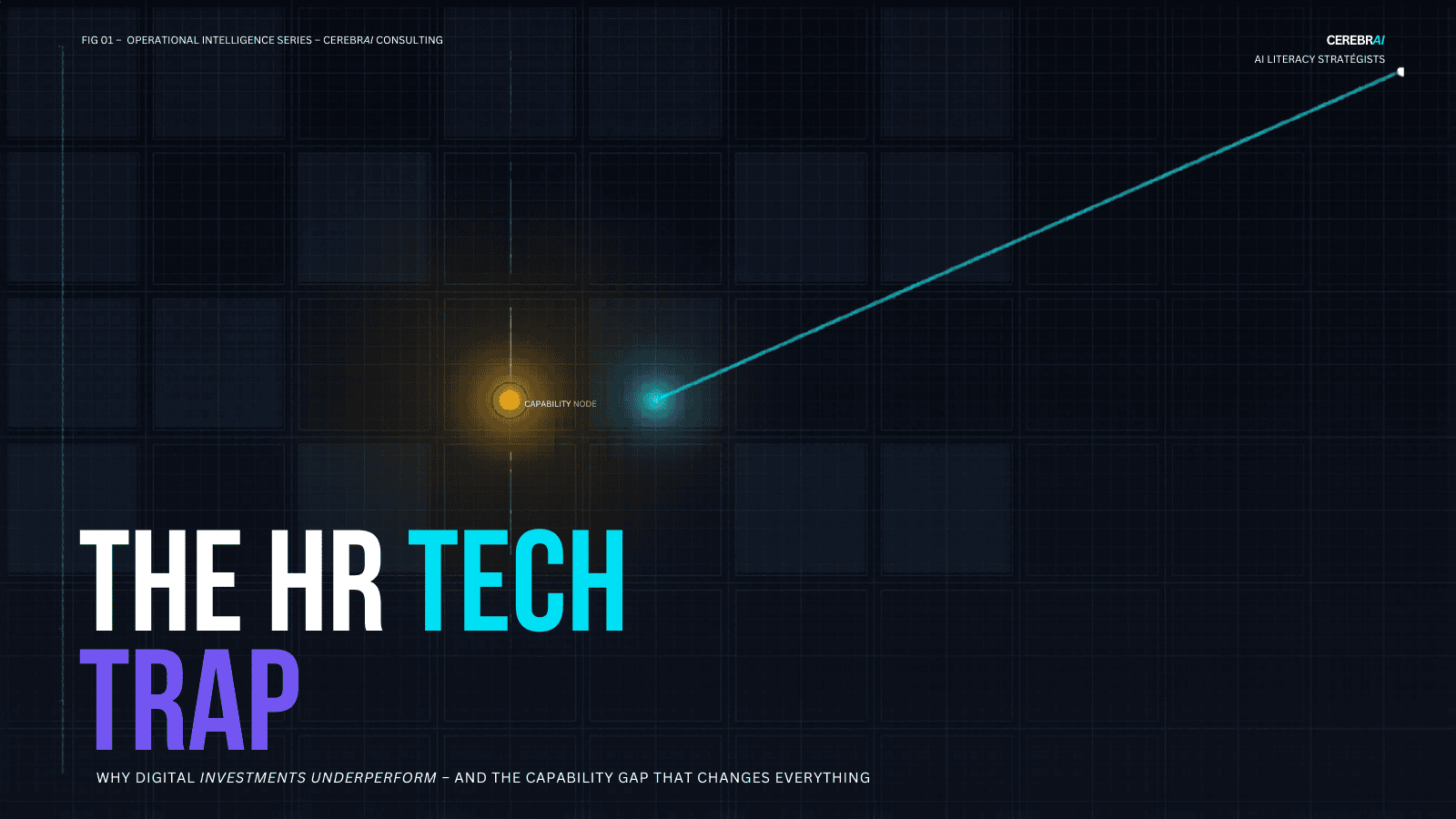
Two banks. Same vendor. Same day. Different results. The research is decisive: the gap between a transformation that lands and one that stalls is not the contract you sign. It is the capability of the people you've already hired — and that is a fixable problem.
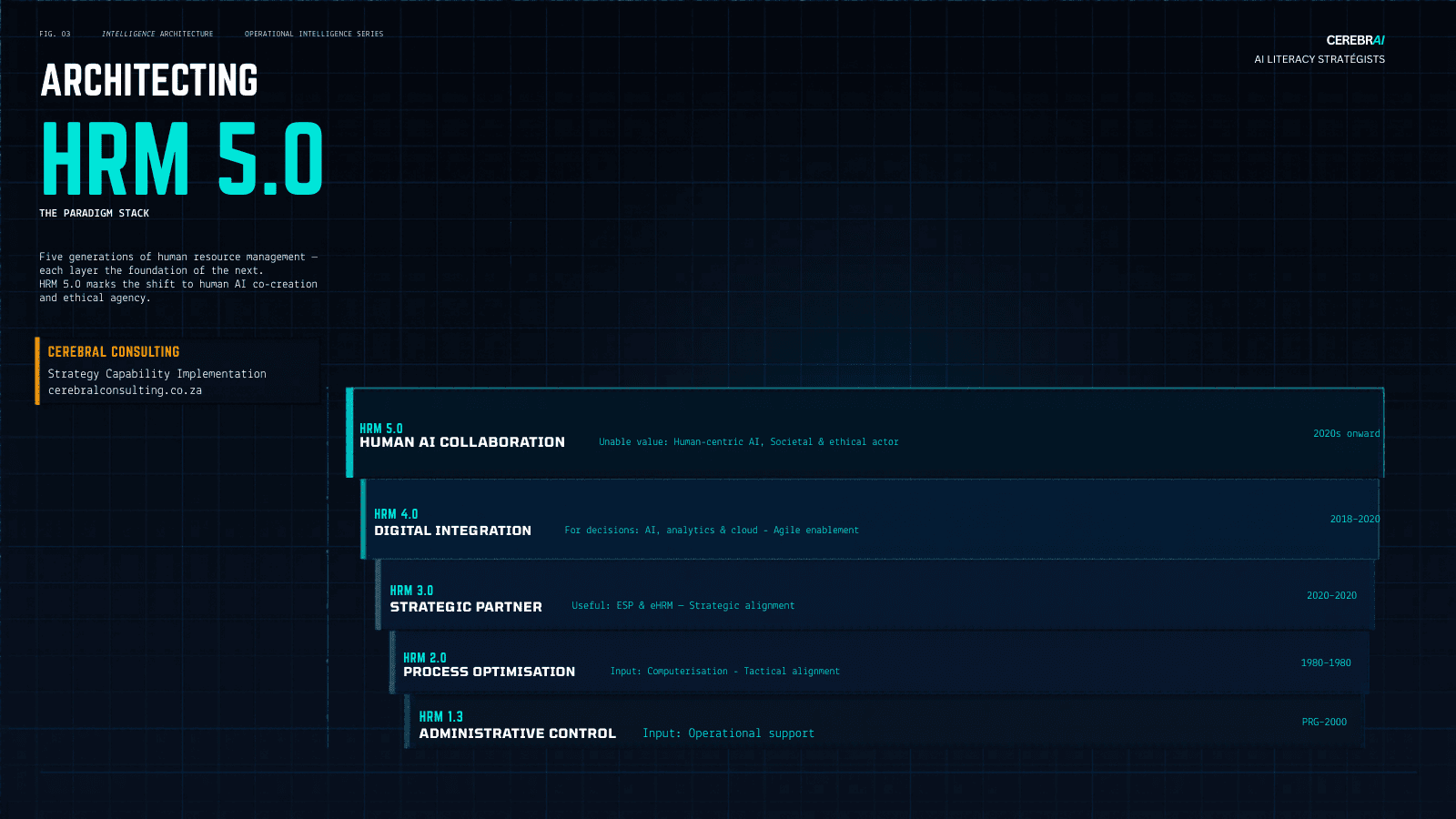
The paradigm that changes everything: HRM 5.0
Kravchuk (2025) gives this shift a name: HRM 5.0. It is the fifth generation of human resource management, and it breaks decisively with the HRM 4.0 era most organisations are still operating in.
Where HRM 4.0 treated employees as a data source for decisions, HRM 5.0 treats them as co-creators of sustainable value. Where HRM 4.0 was about digital integration, HRM 5.0 is about human-AI collaboration. Where HRM 4.0 centred on the platform, HRM 5.0 centres on the human capability the platform is meant to serve.
This is not soft language. Organisations combining cloud, mobile, and analytics platforms together with deliberate employee experiences are designed to produce multiplicative — not additive — gains in satisfaction, retention, and productivity.
Layering tools on top of a disengaged workforce is how you burn capital. Integrating tools into a capable, confident, AI-literate workforce is how you compound it.
I’ve led a few digital transformation strategies for HC teams in my corporate years and the learnings are tangible but allow me to offer a different angle: digital transformation is not an objective state, but a strategic choice. The organisations that treat it as a technology project lose. The ones that treat it as a people, capability, and ecosystem choice win.
What should Executives be doing differently
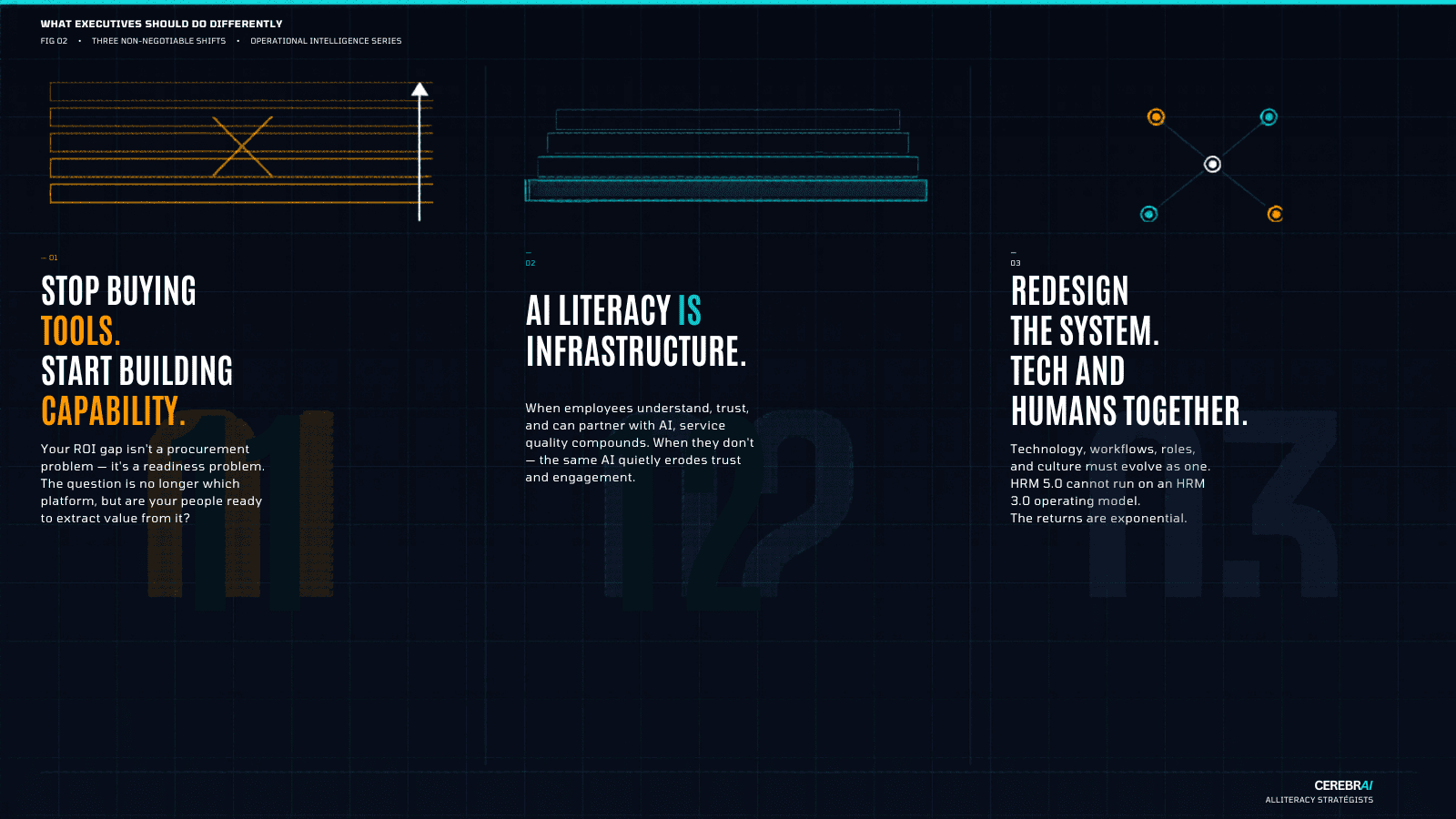
There are three non-negotiable shifts.
First, stop buying tools. Start building capability. Digital HR transformation is not a procurement exercise. It is a readiness exercise. The question is no longer “which platform should we adopt?” — it is “are our people ready to extract value from any platform we choose?”
Second, treat AI literacy as infrastructure, not training. The bank study is decisive on this point: when employees understand how AI makes its recommendations, trust that those recommendations are fair, and feel empowered to override them when necessary, service quality rises. When they don’t, the same AI quietly erodes trust and accelerates disengagement. AI literacy is not a learning and development line item. It is the foundation on which every digital investment either compounds or collapses.
Third, redesign the socio-technical system before you redesign the tech stack. Every study reviewed here reaches the same conclusion: technology, workflows, roles, and culture must evolve together. You cannot bolt HRM 5.0 onto an HRM 3.0 operating model and expect 5.0 outcomes. The work is harder than a software rollout. The returns are also exponentially larger.
The choice in front of every CIO & CHRO right now
The organisations that continue to treat digital HR transformation as a technology programme will spend the next 24 months quietly underperforming the organisations that treat it as a human capability programme. The gap will not show up in a board paper. It will show up in talent attraction, in productivity per employee, in turnover costs, and in customer experience scores that trace directly back to engaged, AI-confident frontline teams.
You do not need more software. You need clarity, confidence, and capability — the three outcomes that determine whether every rand, every dollar, and every hour you have already invested starts compounding or starts decaying.
How CerebrAI helps...
At CerebrAI Consulting, we prepare organisations for a future shaped by AI — practically, ethically, and measurably. Our work sits exactly where every researched article says the value lives: at the intersection of people, capability, and strategy.
We help executives define an aligned, inspiring vision for AI in their HR function. We build structured, human-centric AI literacy pathways for leaders, professionals, and frontline employees. And we partner with you over a fixed engagement to ensure the adoption, productivity, and compliance outcomes your transformation business case promised actually land.
If you don’t have a plan or HR tech stack is running ahead of your people, we should talk.
→ Book a free 30-minute Strategy & Capability Diagnostic to identify exactly where the gap between your investment and your outcomes is hiding.